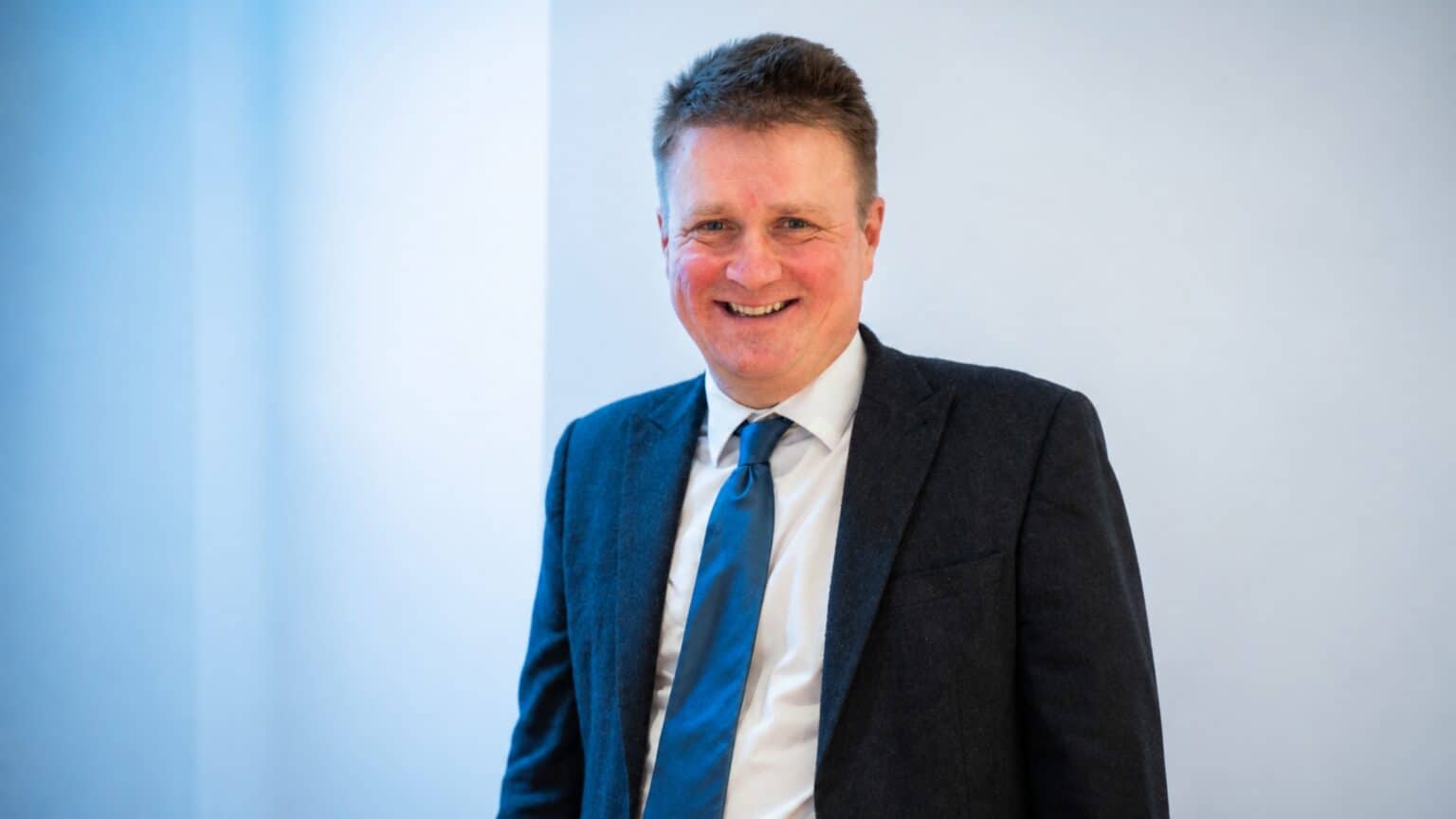
Achieving ECOsmart Platinum certification is no small feat, but for James Barr, General Manager of The Wesley, sustainability isn’t about chasing badges or making grand promises.
With a career spanning luxury hospitality in Canada and the UK, James has seen sustainability evolve from a niche consideration into a business priority. Today, he leads a team that has embedded sustainability across its operations, from supplier engagement and waste management to building improvements and staff-led initiatives.
We spoke to James about his career, the challenges facing the meetings and events sector, and why creating a culture of sustainability matters more than ticking boxes.
Tell us about your role at The Wesley
My title is General Manager, but in reality, it’s probably closer to a Chief Executive role. We don’t have lots of layers of management, so my responsibilities range from reporting to our board and owners through to overseeing the day-to-day running of the business.
The Wesley is owned by the Methodist Church, so one of my key responsibilities is ensuring the business performs well financially and delivers a return back to the charity through rents and Gift Aid payments.
Sustainability is certainly not my entire day job, but we’ve worked hard to make it part of everything we do rather than treating it as a separate project.
How did your interest in sustainability begin?
It actually started when I was working in Canada many years ago with Fairmont Hotels.
I was based in Vancouver and the Rockies, and what struck me was how much more conscious people were about the environment. It wasn’t just the business; it was part of the culture. There was a strong sense of responsibility and respect for the natural environment.
When I returned to the UK, that experience stayed with me. It made me think more about how hotels operate and how we can be more responsible in the way we manage our businesses.
It started with fairly simple questions. Do we have an environmental policy? Are we recycling properly? Are we reducing unnecessary waste? Over time, those conversations became more embedded in the businesses I worked in.
Sustainability clearly matters to you personally as well
It does. I work in central London, but I actually live in rural Scotland. Given the choice, I’d always rather be outdoors than surrounded by concrete.
I’ve always enjoyed being in nature and I think that naturally makes you more aware of the impact people and businesses can have on the environment.
The Wesley has achieved ECOsmart Platinum certification. What are your current sustainability priorities
We’ve already implemented many of the fundamentals, such as renewable energy tariffs, waste segregation and reducing single-use plastics.
The next challenge is understanding our wider supply chain and reducing indirect impacts.
Everyone talks about Scope 1, 2 and 3 emissions, but Scope 3 is where things become much more complicated. It’s about understanding how suppliers operate, how products are manufactured, how goods are transported and the wider impact of the decisions we make.
We’re working hard to ensure our suppliers align with our values and sustainability expectations, but there’s always more to learn and improve.
What role does data play in the Wesley sustainability journey?
It plays a significant part for us. We measure waste streams, track recycling performance and collect data across various operational areas. Once you’ve built up a few years of reliable information, you can start setting meaningful targets.
Like many organisations, we’re focused on reducing carbon emissions wherever possible. For me, it’s about continual improvement and making measurable progress rather than making promises that may be impossible to achieve.
Is there a sustainability initiative you’re particularly proud of?
One project I’m especially pleased with is the garden we’ve created at The Wesley Euston.
We transformed an area that was previously used as a garage into a green space. It’s not a huge project in the grand scheme of things, but in a highly urban environment like central London, creating more green space feels important.
We’re also looking at extending that area further in the future.
How important is employee engagement to making sustainability successful?
It’s absolutely critical.
We have a Green Team made up of volunteers from across the business, including housekeeping, kitchen and operational teams. They aren’t paid extra for it; they’re involved because they care and want to contribute.
What that creates is a culture where sustainability becomes part of everyday conversations rather than something that’s driven purely from management.
If you asked most of our team about sustainability, they would know what we’re trying to achieve and be able to tell you about some of the initiatives we’re working on. That’s a positive place to be.
Has sustainability changed the way you operate as a hotel?
Definitely. Some of the changes are simple. For example, we no longer automatically carry out a full room clean for every stayover guest. Instead, we use a lighter-touch approach that reduces water, energy and linen use while still maintaining guest comfort.
None of these changes are particularly revolutionary on their own, but collectively they make a real difference.
What challenges do you see facing the meetings and events sector?
The biggest challenge for us has actually been the changing nature of meetings themselves. Since Covid, many organisations have become comfortable with virtual meetings and online training. Technology has changed behaviours, and many meetings that previously required travel can now be conducted remotely.
Face-to-face meetings certainly haven’t disappeared, but the market has changed, and venues need to adapt to that reality.
How do you see sustainability evolving across hospitality and business travel?
I think sustainability will continue to grow in importance, but it’s difficult to predict exactly how.
What I do believe is that businesses have a major role to play. The most effective change happens when organisations genuinely want to improve because they see the value, rather than simply because they’re being told to.
At The Wesley, we’ve found that creating a positive culture around sustainability is far more effective than treating it as a compliance exercise.
Finally, what does sustainability mean to you?
For me, sustainability is about responsibility. It’s about looking after the environment, looking after people and ensuring the business itself remains financially sustainable.
Those things are connected. If the business isn’t sustainable financially, then none of the other work can continue. The goal is to keep improving, keep learning and keep finding practical ways to make a positive difference.


Find The Wesley on our ECOmap
The Wesley’s Euston and Camden properties are featured on ECOmap, Greengage’s online directory of ECOsmart-certified venues and organisations committed to improving sustainability across the travel, meetings and events sector.
Event organisers and corporate bookers can explore ECOsmart-certified venues through ECOmap to identify locations that are actively working to reduce their environmental impact and support more responsible event delivery.
Book a free demo today: contact@greengage.solutions