

In this interview, Ruth Duggan, Group Head of Procurement and Sustainability at The Doyle Collection, shares how the group is aligning energy reduction, waste management and meetings strategy across its international portfolio – and why sustainability and commercial performance go hand in hand.
Let’s start off by letting readers know a little bit about your day-to-day role with Doyle Collection.
I am the Head of Procurement and Sustainability. I worked for the company many, years ago, and returned as Head of Procurement and Sustainability in 2024. It’s where I started my career, so I’m really passionate about the company.
Sustainability is a big area for us, and my day-to-day role. We have eight hotels in Ireland, the UK and the States, and while they’re in different countries, we try to apply the same sustainable practises across the group, and hence we have Greengage certifications for all three regions.
The certifications provide us with strong continuity and consistency across the group in practice. We have sustainability leaders in every property, and we all meet once a month on Teams for an update. We might have a specific topic we want to discuss, and everyone can share ideas.
I’ve also set up a Sustainability Steering Committee comprised of senior leaders in the business and we are implementing our Sustainability Strategy across the group in conjunction with the Sustainability leaders in each property.
This year, we’re concentrating on three key areas for 2026. Alongside all the usual initiatives we have, one of the key areas is energy reduction across electricity, gas and water. The second is increasing our recycling rate across the entire group
The third area came from one of last year’s ECOsmart Platinum Inner Circle meetings with Greengage. The discussion was about eliminating plastics from our meetings and events, so that’s also included in our objectives for 2026.
We’ve already transitioned from single toiletries in our bathrooms to large-format across the whole group – that was one of our goals for last year.
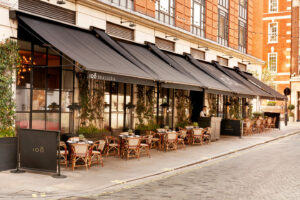
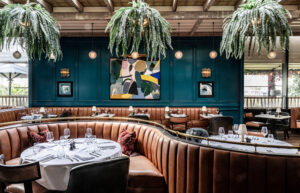

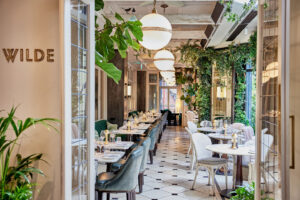
Images supplied by Doyle Collection
Does that work out as a cost saving alongside the waste reduction?
Yes, it does. If you go into a hotel and get a 30ml bottle, you probably only use 15ml if you’re staying for only one night. And on top of waste reduction, we can save on disposal and storage costs for those products.
Sustainable changes are financially beneficial as well, and as an industry, we need to be more vocal about that, because many people see sustainability as a cost and “something else I have to do”. It’s a very commercially sound and clever move as well.
Reducing our energy use has an environmental impact and lowers our costs. Reducing our food – because every tonne of food costs about €2000 – is beneficial to the environment and the bottom line.
I was at a great conference recently, all about getting buy-in from your board and all that good stuff. Our board is very supportive, which is great, but not all companies have that level of support. Reduction in energy consumption, improved recycling rates are now part of every hotels targets for 2026, which has really enabled me to embed sustainability in the business objectives and has been received really well across the board, as we are all passionate about sustainability and making it a key focus of the business.
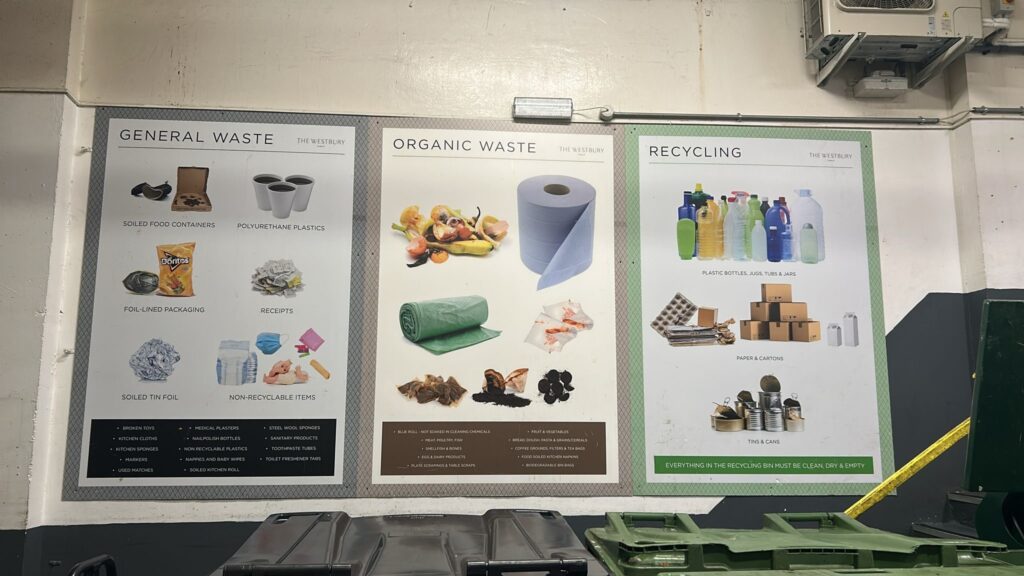
Image supplied by Doyle Collection
Do you spend a lot of time looking at data?
Yes, I do a lot with data. I would work with a lady in our office who looks after the day-to-day F&B operations. And I look after more of the contracts – waste management, linen, service maintenance, contracts and one-off projects as well. There’s a bit of everything, which is great – I never get bored, even with all the data analytics.
What does sustainability mean to you personally? Is it as much a personal focus as it is professional?
Yes. I have children, and I might not see the benefit of what we’re all trying to do in my lifetime, but hopefully they will.
I’m passionate about it now but it wasn’t always on my radar professionally. In my last job, I got involved in the company’s accreditation which got me interested in it professionally. I think it’s good for our customers and staff to see our commitment. It’s important for the next generation, and being a sustainable employer does attract them to us.
They can see we are being responsible, in terms of charity work and our communities as well. So, it’s beneficial to everyone – it’s a no-brainer.
It’s an understandable concern for younger generations, so it makes sense that many of them prioritise sustainability when they’re considering potential employers.
Yes, we find it is that way now. It’s not necessarily a make-or-break point. But when you put it alongside everything else, being responsible definitely puts you ahead of companies that aren’t.
How do you see sustainability influencing the industry more broadly, at the moment?
Well, for example, in Ireland, we have committed to EU goals by 2030.
Failte Ireland, our National Tourism Development Authority, has set up a climate action programme that hotels can sign up to, and they fund a consultant to complete an audit. They’ve audited all our properties’ energy performance and created a three-year action plan for improvement. They’ve really realised how vital the hotel and tourism industry is to those reduction targets and what Ireland has signed up to.
For context, the Corporate Sustainability Reporting Directive (CSRD) is a mandatory EU regulation that requires large and listed companies to disclose detailed information on their environmental, social, and governance (ESG) impacts. But there’s only really one hotel group in Ireland that’s big enough to have to do that. So, there hasn’t really been a driver of change. If hotels didn’t have Failte Ireland’s climate action programme, with three years of free consultancy and actions to follow through on, I’m not sure it would be happening as fast.
That’s what the conference I was at was about, along with getting buy-in. There were over 200 delegates from hotels all over Ireland. We all had to pay for the event, so the number of people there demonstrates there is a commitment from hotel teams.
Why do you partner with Greengage?
When I came in here a year ago, Doyle Collection was already using Greengage, and I’d only had experience with one other organisation, which is good as well. But what I found with Greengage is that it’s not just ticking boxes and submitting forms.
There’s been really good information coming from Greengage and a lot of engagement and networking with other people in the hospitality industry. They’ve also recently built a meeting and events portal where clients can check their carbon emissions from their meetings and events, which is brilliant.
The IMPACTportal?
Yes. Greengage is constantly trying to develop, grow and improve – it’s not just a certification. You don’t just get your ECOsmart certification and a “there you go for the year”. Some others are quite like that. But with Greengage, we benefit from a support network. I’ve met some really interesting hoteliers and people from other kinds of service industries. It’s so much more than just a certificate on your wall – with active engagement, information, and ongoing development.
Do you find that with the Platinum Inner Circle and other initiatives, with lots of people with that interest, that competition almost goes out the window because everybody’s there for the same goal?
100%. Funny you say that, because I recently had lunch with the Head of Procurement for another hotel group here in Ireland. And I said to him, “This is brilliant,” because years ago, purchasing people or different hotels would keep to themselves, and wouldn’t share information. And I found we were relying on suppliers to tell us what’s going on in the industry – but they’d have had biased views.
So, now I’m on a committee in London which has set up HPA ( Hotel Procurement Association) in the UK for exactly that. It’s for hotel procurement people to come together, share ideas and discuss what they’re struggling with. It’s not to share pricing or sensitive information – it’s purely to network. Every other industry does it, so why can’t hotel procurement?
We have hosted an evening of presentations of AI for procurement, with 25 hotel procurement managers, followed by a networking event. In April we are hosting a sustainability event for HPA in London, with speakers and a chance to network. People used to be very precious – they were trying to ‘get the best deal’. Yet that’s not how business works anymore. Bouncing ideas off each other is exactly what we should have been doing all along for everyone’s benefit.
It’s the same with the ECOsmart Platinum Inner Circle. We meet and ask each other, ‘What are you doing?’. We share what initiatives we are implementing, and some will work for you some won’t, but its great to have these platforms.
Looking beyond the 2026 three core goals in sustainability at The Doyle Collection, how do you see the role of sustainability evolving over the next few years – for Doyle Group as much as the industry as a whole?
I’m the Head of Procurement and Sustainability, and I can see that, in three years, the sustainability role will be a primary one. Bigger groups that can afford to are doing it because they see the benefits and necessity, both environmental and commercial.
In fact, I have a nephew who is studying energy management and sustainability in college – he’s doing a Master’s in it. He’s only at the start of where we are with sustainability. I view it almost like somebody working in computers 30 years ago.
You’re not going to be able to do everything because, it’s still a business you’re running. But I see sustainability as a career choice now.
We’ve all come such a long way in the last, even five, years. I think COVID gave people time to reflect on how they run businesses and what is important to the longevity of their businesses and the planet.

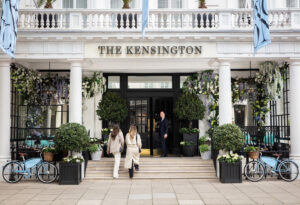

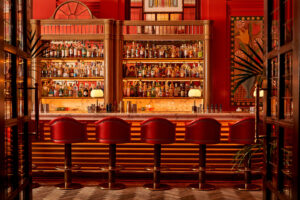
Images supplied by Doyle Collection
If you could make one big change in the industry to help sustainability faster, what would it be? Almost a wish-list action for the industry.
I would eliminate food waste. Food waste is huge when you consider your carbon footprint, methane, and packaging. There are so many factors involved, and at a time when people around the world are starving.
Yes – it’s a challenge in events too, isn’t it? Getting the balance and catering right?
Yes. I was talking to someone at a conference about it. They were hosting an event, and the hotel called to say they were actively working to reduce food waste and asked if they could pre-order meals.
If you consider a menu with the choice of beef or salmon, for example, about 30% of people will choose salmon, and 70% will choose beef. But you have to buy a little more of everything just in case – unless you pre-order your meals. (You can’t really do much if somebody doesn’t show up, of course). Pre-ordering is a clever way to approach groups.
Big buffets are a challenge. That’s where we’re working at Doyle Collection on using smaller serving dishes and refilling rather than putting out the big bowls.
If you’re using less, you also have less packaging to dispose of, too. I was actually on a steering committee years ago in the UK with WRAP (Waste and Resources Action Programme). It was really progressive and ahead of its time back then. I represented hotels, and there was somebody from Marks and Spencer’s – people from lots of different industries. We were advising the government on food industry regulations and writing papers in 2010 or 2011.
Minimising food waste is definitely a passion for me.
It’s great that you have visibility into the cost-benefit, given the crossover between your roles in procurement and sustainability! You’re in a perfect position to be able to share that message.
Absolutely. That’s one reason I’m doing this and talking about it.
I think the hotel industry faces a unique sustainability challenge with communication. Guests don’t always understand the operating costs nor the sustainability improvements we try to make – they just see a room rate.
We’re balancing being a luxury brand with responsible business, and when we make these changes or remove items from the rooms, we do so because we want to be more sustainable, not to make more money. It’s a difficult message and perception to challenge and communicate.
We’re doing so much positive work, and I want to help share the message that we are very invested in it. It goes beyond sustainability for us, too. We encourage our staff to support others and give everyone a full day of paid time off to volunteer for any charity they want.
At the end of the day, swapping out a plastic shampoo bottle isn’t about ticking a box or following a trend. It’s about the people behind the scenes in sustainability at The Doyle Collection who genuinely care. We feel a deep responsibility to the planet and to future generations, and we want our guests to know that every change we make is a step toward leaving the world a little better than we found it.