Sustainability in business travel has changed significantly since 2020. From environmental commitments to measurable progress, the industry is moving towards a more practical, evidence-based approach. But what comes next?
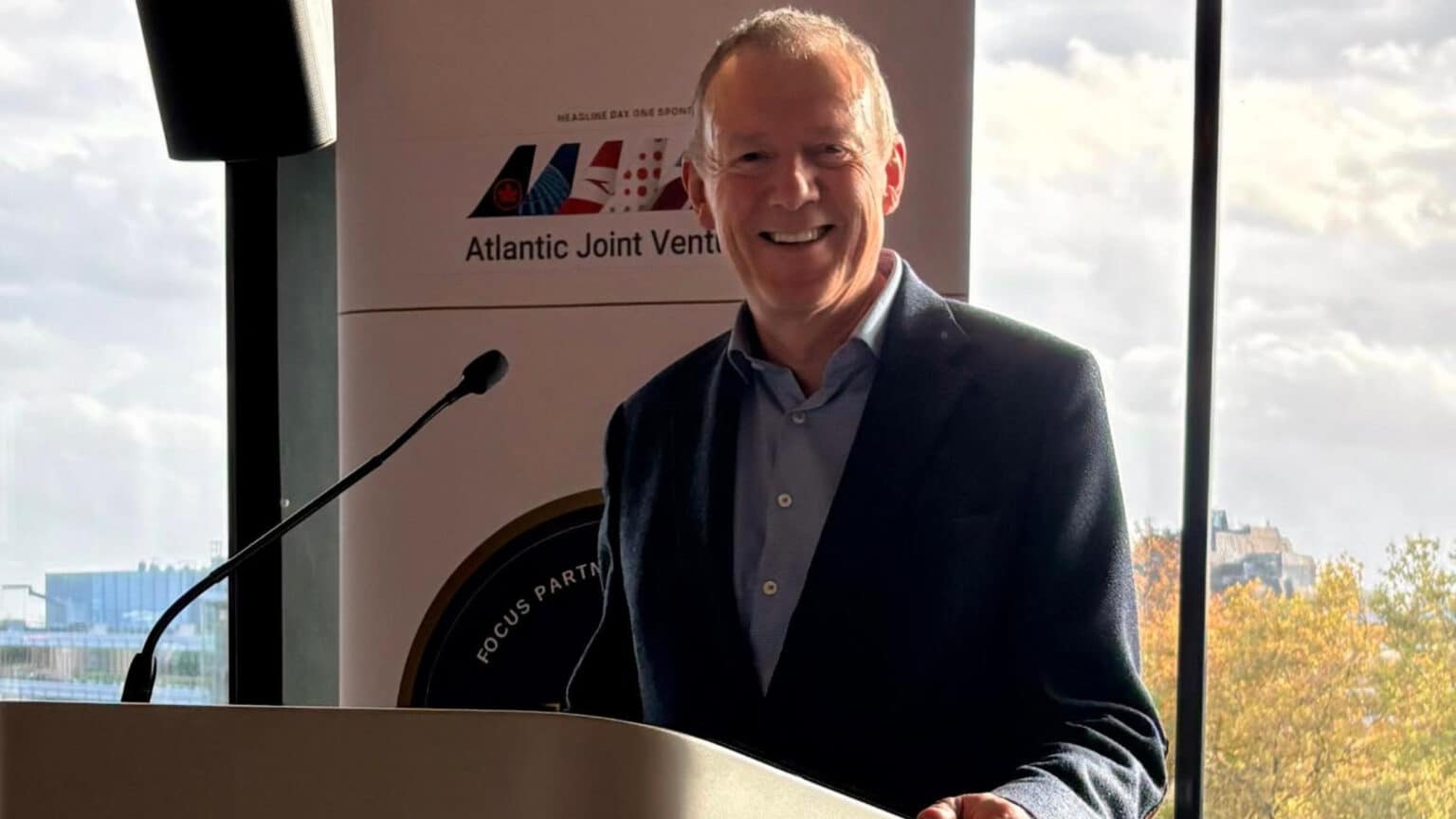
At this year’s Focus Partners Conference, Greengage CEO Andrew Perolls explored six sustainability trends set to shape business travel in 2027 and 2028, from carbon reduction and independent certification to AI and more informed procurement decisions.
His central prediction was clear:
“Sustainability will become more practical, more evidence based and more closely connected to cost and procurement.”
So, what does that mean for travel management companies (TMCs), corporate travel buyers and the wider hospitality industry?
How sustainability in business travel has evolved since 2020
March 2020 marked a turning point for the travel industry.
As the world faced the unprecedented disruption of the pandemic, conversations around the environment, climate change and the future of travel were also gaining momentum.
It was also the year Greengage awarded its first ECOsmart sustainability certification.
Six years later, the landscape looks very different.
Sustainability has evolved from something often driven by individual initiatives and enthusiastic teams into a much broader business consideration.
The changes can be summarised through six important shifts:
- From initiatives to strategy: Sustainability is increasingly considered within wider business planning rather than through isolated activities.
- From claims to evidence: Organisations are expected to substantiate their environmental commitments with credible information.
- From measuring to reducing: Understanding environmental impact remains important, but demonstrating progress towards reducing it is becoming the greater priority.
- From green teams to whole organisations: Sustainability is moving beyond dedicated teams to become a shared organisational responsibility.
- From self-declaration to independent verification: External assessment is becoming increasingly important in building trust and credibility.
- From nice-to-have to commercial consideration: Sustainability is playing a growing role in procurement, supplier selection and business relationships.
These changes reflect an industry moving towards a more mature, accountable approach to sustainability.
And the next two years could accelerate that evolution further.
Six sustainable business travel trends for 2027 and 2028
The presentation explored several developments that could influence how the business travel industry approaches sustainability over the coming years.
- Greater scrutiny of sustainability claims
As expectations around environmental transparency increase, businesses will need to demonstrate that their sustainability claims are supported by credible evidence.
Greenwashing concerns, evolving regulations and growing buyer expectations are all contributing to this shift.
For hotels, venues and travel suppliers, this places greater importance on transparent reporting, credible data and independent verification.
Sustainability credentials will need to communicate more than ambition. They will need to provide confidence in the practices and processes behind the claims.
Independent sustainability certification, such as Greengage’s ECOsmart programme for hotels and meeting venues, can help organisations demonstrate their commitment through external assessment.
- Moving from carbon measurement to carbon reduction
Carbon measurement has become an important part of the sustainability conversation in business travel.
Understanding the emissions associated with travel and accommodation provides a foundation for informed decisions.
However, measurement alone is not the end goal.
The next stage is using that information to identify opportunities for improvement and support emissions reduction.
For TMCs and corporate travel buyers, this means looking beyond reporting to consider how travel policies, supplier choices and booking decisions can contribute to sustainability objectives.
The focus is shifting from simply knowing the numbers to understanding what can be done with them.
- Recognising the wider meaning of sustainability
Although carbon emissions and environmental impact remain essential considerations, sustainability encompasses more than CO₂.
Social responsibility and economic sustainability are also important parts of the picture.
This broader perspective encourages businesses to consider how their operations affect people, communities and the long-term resilience of their organisations.
For the travel industry, it reinforces the importance of taking a holistic approach rather than viewing sustainability exclusively through the lens of carbon emissions.
- Corporate buyers will expect evidence of improvement
One of the most important questions facing travel suppliers is changing.
Rather than simply asking whether a supplier has sustainability credentials, corporate buyers may increasingly ask:
“Can you help us demonstrate improvement?”
This represents a significant shift in expectations.
Corporate travel buyers are looking for information that can support their own sustainability objectives and help them make more informed procurement decisions.
For TMCs, hotels and other suppliers, the opportunity lies in providing credible data, transparent information and practical support.
Those able to demonstrate progress and help customers understand their environmental impact will be better positioned to respond to these evolving expectations.
- Sustainability information will become part of everyday travel booking
Travellers and travel bookers increasingly want access to sustainability information when making booking decisions.
For air travel, this is already relatively well established, with carbon emissions information increasingly available alongside flight options.
Now, similar expectations are emerging for hotel bookings.
Corporate travellers and travel bookers want to understand the sustainability credentials of accommodation providers as easily as they can compare price, location and availability.
This is where technology and independent sustainability certification can play an important role.
Through API integration with booking systems, Greengage’s ECOsmart certification enables sustainability information about certified hotels to be displayed at the point of booking.
This puts relevant sustainability information directly into the hands of decision-makers, allowing them to consider environmental credentials alongside other booking priorities and make their own informed choices.
For TMCs, it represents an opportunity to make sustainability a more integrated part of their everyday advice and services, without adding unnecessary complexity to the booking process.
- AI could play a growing role in sustainable business travel
Artificial intelligence is already generating significant discussion across the travel industry.
But how relevant could it become to sustainability?
As businesses seek more efficient ways to collect, interpret and use environmental data, AI presents opportunities worth exploring.
Potential applications include supporting data analysis, reducing manual administration and helping organisations make better use of sustainability information.
For TMCs and corporate buyers, the value will depend on whether these technologies can deliver reliable, useful information that supports better decisions.
Technology alone will not deliver sustainability progress, but it could help make the processes behind measurement, reporting and decision-making more accessible and efficient.
Why sustainability certification matters for business travel
The evolution of ECOsmart reflects the wider changes taking place across the industry.
Since Greengage awarded its first ECOsmart certification in 2020, the programme has expanded internationally, supporting hotels and meeting venues in demonstrating their sustainability practices through independent assessment.
As the industry moves towards greater transparency and accountability, credible certification has an important role to play.
For hospitality businesses, it provides a structured approach to assessing sustainability practices.
For TMCs and corporate travel buyers, it can provide additional confidence when evaluating accommodation and meeting venue options.
And as sustainability information becomes more closely integrated into procurement and booking decisions, the ability to identify independently assessed suppliers will become increasingly relevant.
The future of sustainable business travel: Practical progress
If the past six years have been about establishing sustainability as a business priority, the next two could be about making it a more practical and measurable part of everyday operations.
The direction outlined at the Focus Partners Conference points towards an industry where sustainability is supported by evidence, embedded in procurement and increasingly connected to commercial decision-making.
For TMCs, this creates opportunities to strengthen the advice and services they offer.
For hotels and venues, it reinforces the importance of credible sustainability practices and transparent communication.
And for corporate travel buyers, it highlights the value of working with suppliers who can support informed decisions and demonstrate improvement.
The industry has made progress since 2020, but the next chapter will require continued collaboration, credible information and a focus on action.
Moving sustainability forward, together.